A restaurant website that cuts your delivery-app dependence
Delivery apps take 20–30% of every order. Your own site keeps that margin.
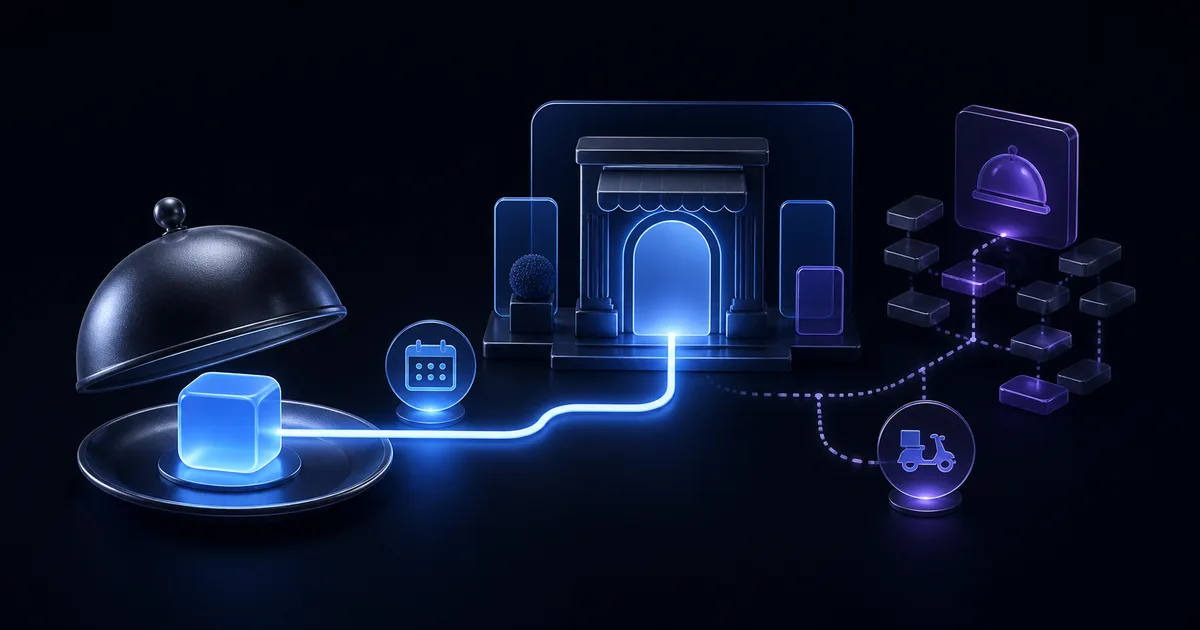
If you sell for 100 and the app takes 25, you are working for them. Your own site keeps the difference.
What you need
- A menu you update yourself
- Online or WhatsApp ordering
- Table reservations
- Real, well-lit food photography — the most important item
- Branches and hours
Photography
Food photos are the product on screen. One good shoot serves you for a year.
Keep the menu as text, not an image. An image menu cannot be found on Google or read comfortably on a phone.
Loyalty
A customer who orders directly is yours to bring back. One who orders through an app belongs to the app.
Turn the idea into a controlled launch
Start with the customer action the project must make easier: call, book, request a quote, buy or visit. That decision determines the page structure, content and tracking. A long feature list without a primary action usually produces an attractive project that nobody can measure.
Launch the smallest complete version, not a half-finished large version. Give one owner responsibility for content and approvals, test the full journey on a real phone, and record a baseline before launch. Improve from customer behaviour after launch rather than from internal opinions alone.
- Define one primary conversion and at most two supporting actions.
- Prepare final Arabic and English content before visual approval.
- Test forms, calls, maps, checkout and messages on real devices.
- Assign an owner and review performance every month.
A topic-specific field checklist
- Put the current menu, location, hours, booking and ordering route within one tap on mobile.
- Publish prices in Egyptian pounds and mark service, tax and delivery treatment clearly.
- Use structured restaurant data and keep opening hours consistent with the Business Profile.
- Track menu views, direction requests, calls and completed orders separately.
Details most proposals miss
A local-service website must answer the questions that block a call: Is this the right service for me? Is the provider credible? What happens next? How long will it take? Where is the location? The design should shorten that decision without making unsafe or exaggerated promises.
- Service pages built around real customer questions and eligibility.
- Consistent name, phone, address, hours and map data across the site and Business Profile.
- A mobile contact layer for call, WhatsApp, directions and booking.
- Structured lead forms that collect only information needed for the first response.
- Original proof such as team, location, process, credentials and dated work.
The TechMate implementation layer
TechMate connects the public website to the response process behind it. A lead should arrive with context, source and requested service, then move into a clear follow-up path instead of disappearing inside an unstructured inbox.
- Separate Arabic and English search intent rather than literal translation.
- LocalBusiness data matched to visible page information.
- Campaign and service source attached to every enquiry.
- Consent-aware media and careful wording for regulated professions.
- Monthly review of calls, bookings, attendance and qualified outcomes.
Delivery phases that reduce risk
Build from the first customer question to the completed appointment or visit. Every page and form should remove one uncertainty and hand the team enough context to respond properly.
- Interview reception or sales about repeated questions.
- Map search intents to service and location pages.
- Prepare original proof and approved wording.
- Connect enquiries to response and booking workflows.
- Review qualified calls, bookings and attendance monthly.
Questions that reveal implementation quality
- What must a customer know before calling?
- Which claims require professional or legal review?
- What information is genuinely needed in the first form?
- How is an enquiry assigned and followed up?
- Which offline outcome proves the website worked?
A realistic scenario
Example: a customer sees an old menu price on Google, another price on the site and a third at checkout. A single menu source with publish time, branch availability and price rules protects trust and reduces support calls.
Sources directly related to this guide
Have a question this did not answer?
Send it over. We answer properly, whether or not you end up working with us.